Karagöz Shadow Play
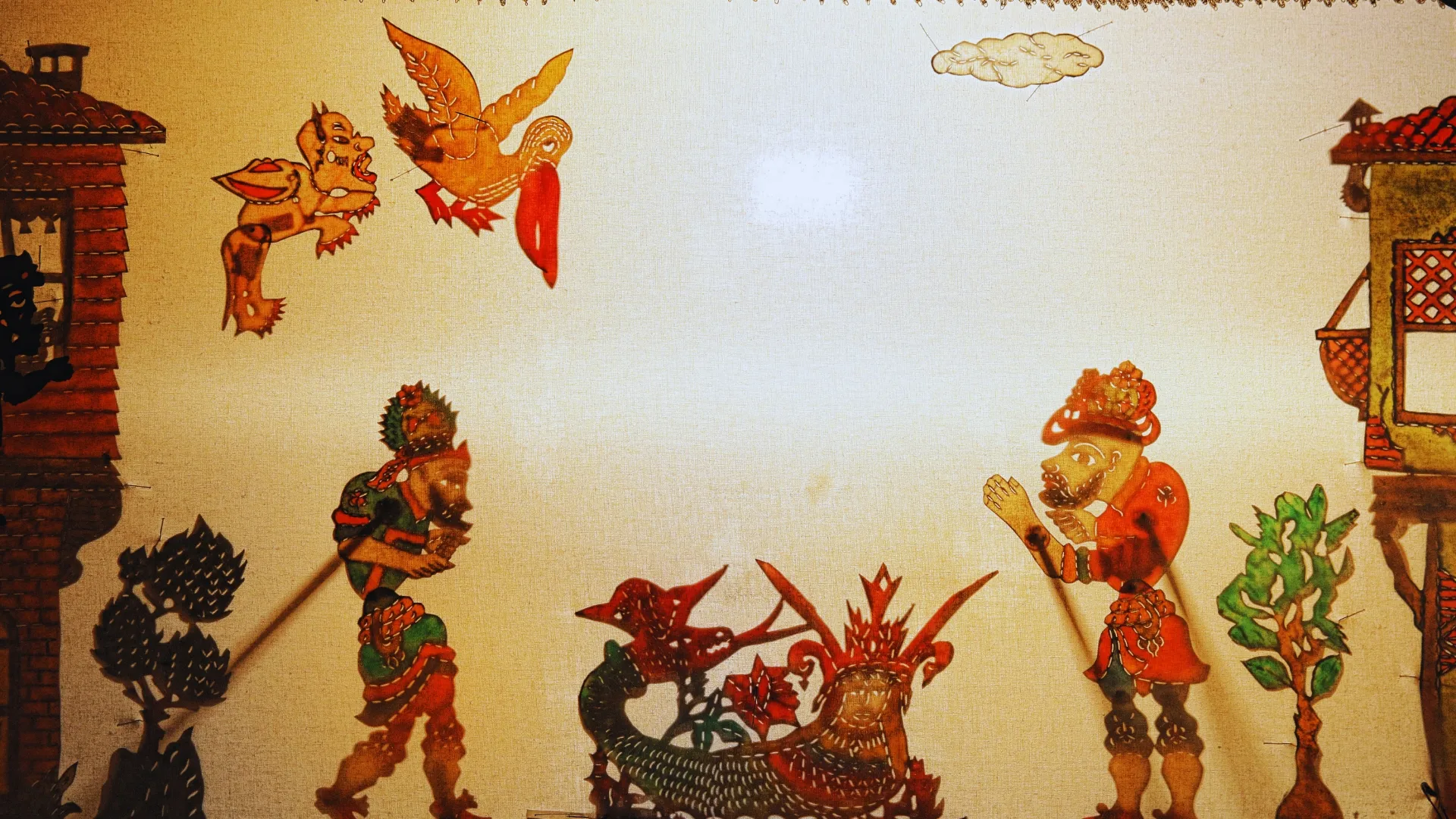
Karagöz shadow play holds a prestigious place in Turkish cultural heritage. Research indicates that the art of Karagöz originated in Bursa. The protagonists, Karagöz and Hacivat, as well as the play’s pioneer, Sheikh Küşteri, are all associated with this city. Consequently, Bursa hosts international shadow play festivals to honor this tradition. While its roots are firmly planted in Bursa, it is widely accepted that Karagöz matured under the influence of diverse cultures, reaching its definitive synthesis within the Ottoman Empire.
The Legend of Karagöz and Hacivat
Sheikh Küşteri is credited with inventing the play. According to popular legend, Karagöz and Hacivat were real individuals living in Bursa. The most famous account suggests they were workers involved in the construction of Orhan Mosque during the reign of Sultan Orhan Ghazi Their constant joking reportedly delayed the construction, leading to their eventual execution.
To console the grieving Sultan after their deaths, Sheikh Küşteri crafted leather puppets of the duo, stretched a white curtain, and performed a show recreating their witty banter.
The Art Form Today
Today, Karagöz shadow play is performed behind a white cotton screen stretched over a wooden frame. The puppets are maneuvered in front of a light source that casts their shadows onto the screen. Historically, this light was provided by oil lamps or candles, but it has now been replaced by electric bulbs.
Recognizing its global cultural significance, the Karagöz shadow play was inscribed on the UNESCO Representative List of the Intangible Cultural Heritage of Humanity in 2009.

Other Articles

For All Requests, Complaints, and Questions
444 16 00