Monasteries of Uludag
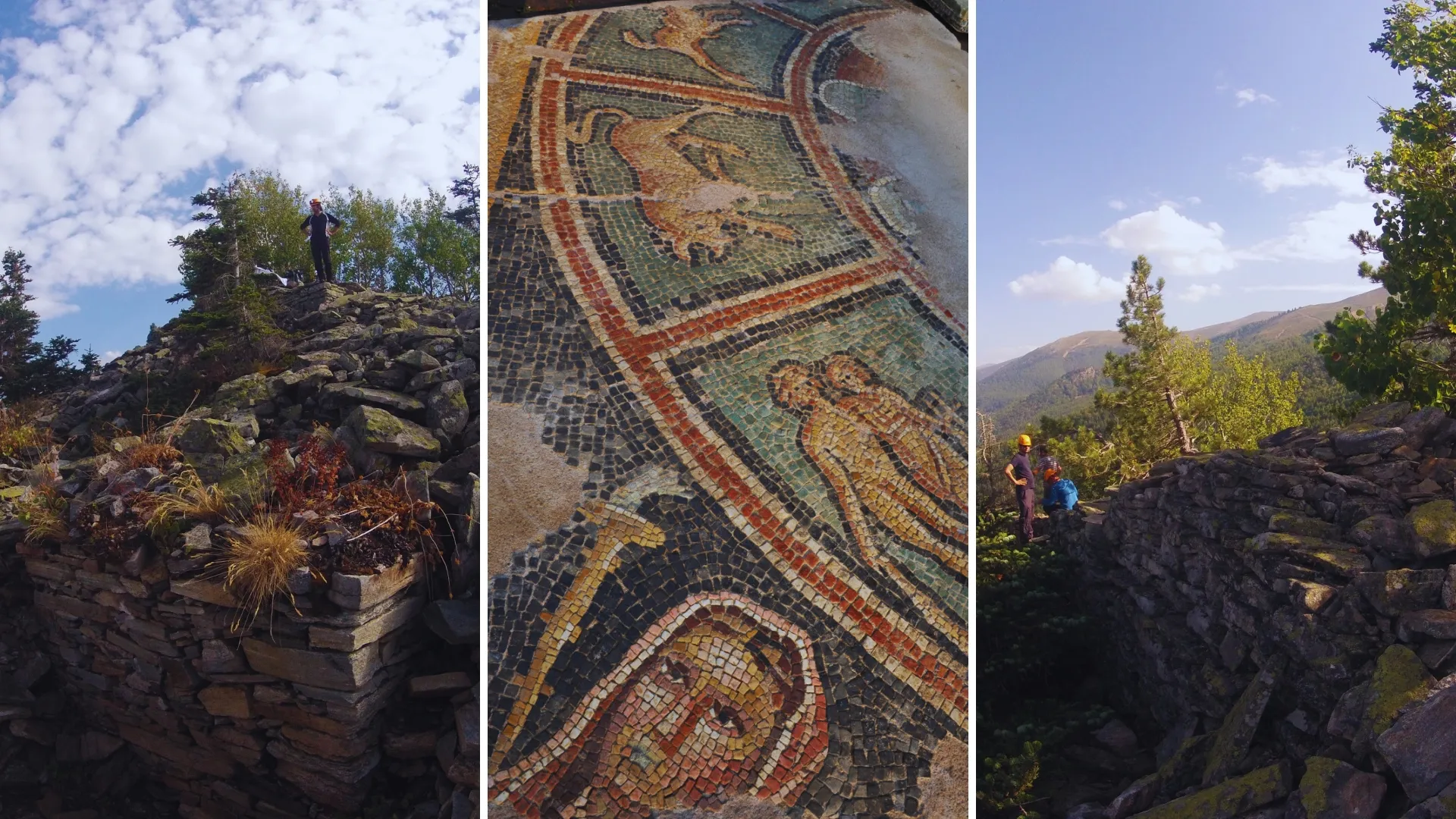
The monasteries in Uludağ were built between the 5th and 8th centuries AD. Especially in the 8th century, monks fleeing from the internal conflicts in Istanbul during the iconoclast period went to Uludağ. The first study on the monasteries of Uludag was conducted by the Frenchman Bernardin Menthon. In his book L'olympe de Bithynie, written in Paris in 1935, he mentions the monasteries of Uludağ. Later, Dr. Osman Şevki Uludağ, in his book “Uludağ Temples Monks and Dervishes”, mentions that there are 28 monasteries in Uludağ and that they are gathered in 3 regions:
Region; between Nilüfer and Gökdere: 11 monasteries
Region; between Gökdere and Kaplıkaya Sobran Stream: 5 monasteries
Region; between Kaplıkaya and Deliçay: 12 monasteries.
- Region: Between Nilüfer and Gökdere
- The monastery of Perler (Monaster des peres): According to Father Menton, it is south-east of Çekirge.
- Monastery of the Agors (Les agaures): It is on the 2760th meter of the Bursa - Uludag road and on the right side of the road. It is one of the main monasteries that the emperor's officials did not leave out of sight during the icon wars. It was built in the early 8th century and dedicated to the famous saints St. Martyrs Cosme and Damien. The people also called this monastery Kalimn (Calymne), which is the name of its location. It was also called the monastery of Ogar (Augares) because the ladies visited it a lot. The location of this monastery was pointed out by an anonymous chronicler who wrote the life of (St. Eustrate), from which the monk Manton learned. The population of the monastery of the Agors was very large. Because of the large number of members and visitors, many houses were built around it. These houses later became a semi-monastery and a separate branch of the Agors.
- Agapios Monastery: It is just north of the village of Inkaya. It was a branch of the Agora monastery
- Monastery of the Leucades (M. Leucades): This is another branch of the Agora. It was located on a small hill south of the village of Dobruca and on the edge of the Nilüfer River.
- Abramites Monastery (M. Abramites): It is 200 meters high, north of the village of Inkaya and the monastery of S. Agapios, west of the Bursa Uludag road. It was built during the time of the patriarch (St. Taraise). Since the monastery of the Leukkadians had to turn away many applicants, the patriarch was told of the necessity of building another monastery to relieve the burden of this monastery, and he helped to build the monastery of the Abramites by leaving his own property, full of ruins and stones, for the monastery.
- Bale Monastery (M. Balee): It is near the source of the Cilimbos stream. It is just one hour away from Bursa. It was built in this century and has many zawiyas.
- Zekeriya Monastery (M. St. Zacharie): It is near the village of Misi and by the Nilüfer river. It was built by St. Pol. When St. Pol was on his way to Jerusalem to make pilgrimage to Jerusalem, a voice told him to go back and build a church in the place to be shown and to herd the flocks of God there, St. Pol came here and built this monastery.
- Trikalis Monastery (Ermitage Trichalice): This zawiyah was located where the tomb of Abdal Murad now stands. After the Turkish conquest, it served as a lodge for dervishes. The famous St. Yuvanis lived a solitary life here for a long time. When Emperor Theophil wanted to consult this most revered saint about icons, he had St. Yuvanis searched for him and found him here.
- St. Nicholas' Hermitage (Er. S. Nicholas): It is 200 meters away from the Bale monastery. Its location is 620 meters above sea level. It is the highest of the shrines in this region.
- Zawiyah of Constantine (Er. S. Constantin): It is 430 meters high, on the side of the mountain road leading to the Bale monastery.
- Women's Monastery (Couvent de femmes): It is on the left side of the Uludağ road opposite İnkaya Village. It was built by S. Pierre d'Atroa in 814. It is understood from its name that it is for women.
- Between Gökdere and Kaplıkaya (Sobran) stream
- Saccudion Monastery (M. Saccudion): On the Kadi Plateau, at an altitude of 1075 meters. It was built in 781. This area used to be one of the most ornate parts of Uludağ. There were many forests around, giving dark shadows along with fresh air. There was a pure and clean water stream extending towards the sea. In the time of Mustafa III, he had sent the members of an epidemic that broke out in the palace here for treatment. The upper side of Gökdere River is on the Kadıyayla side. Famous saints such as St. Teodoro Stüdit St. Josef Tessalonki lived here. Although it was forbidden to keep female animals in and around the monastery, towards the end of the 8th century, monks used to keep and trade animals here. The surroundings of the monasteries turned into farms. St. Theodor set an example for others by keeping female animals away from the monastery for the rest of his life. Saqcedon's example made him famous. Those who wanted to become priests came here from all over the world, and in a short time it had around 400 monks, and the monastery became famous among the monasteries of Uludag. The monks of this monastery were respected by everyone, so the emperors did not keep them out of sight. When Constantine came to Bursa, the monks of the monastery did not need to come down from the mountain to meet him. Constantine expected to be welcomed. Enraged, Constantine imprisoned a priest named Plato and insulted him. He had the other monks beaten, dispersed and left this monastery isolated and helpless. Nevertheless, the monastery remained popular for a long time. The building of this monastery was very beautiful, with mosaic pavements and beautiful arches.
- Katarlar Monastery (M. de Catheres): It is in Kadıyayla, a few hundred meters from the Sakküdyon Monastery. It is 1010 meters high. When the debris and stones were removed due to fires and agricultural purposes, no trace of it remained.
- Libyana Monastery (M. de Libiana): It is at an altitude of 575 meters on the descent from Kadıyayla to Bursa. It is south of Değirmenlikızık village. It was used as a lodge after the Turkish conquest and was repaired as it aged. This is the oldest Arab lodge in Uludağ.
- Mezolimp Zaviyesi (Er. De Mesolympe): It is at 860 meters between Katars and Libyana. At the height of Leon Lermenien's persecution of icons, St. Piere d'Aroa gathered his monks here.
- Del Zaviyesi (Er. De Dele): It is on the right side of the road leading to the mountain from the Hünkar Köşkü and at an altitude of 450 meters. It was a hermitage for St. Piyer for a long time. This asylum is in the form of a cave.
- Region Kaplikaya to Deliçay
- Kril Monastery (m. de Kril): It is a quarter of an hour away from the Balıklı Creek, which runs between the villages of Fethiyekızık and Cumalıkızık. These villages and the monastery form a triangle. To reach it, the mountain road from fethiyekızık should be followed. It is 430 meters high in relation to the sea. Among the ruins of the monastery there is a small round pool and a pole with a salip painted on it. The founder of this monastery is the priest who is the starting point of the Cyrillic alphabet.
- Monastery of the Eunuchs (m. des ennuques): It was built towards the end of the century on the Gölcük plateau. It is at an altitude of 1000 meters upwards from the Kaplikaya bed. It was a famous monastery that sheltered many saints and was always kept in view by the emperor's officials. St. Jak and St. Antuvan became famous here.
- Sinsel Monastery (M. de syncelle): It is located near the Hadımlar Monastery, to the east of it and near the Balıklı stream. Its location is called Yurdyeri by the locals and is 70 meters above the sea.
- Symbols Monastery (m. de symboles): The first of many monasteries along the Kilise stream that flows between Cumalıkızık and Hamamlıkızık. It is to the right of the path along the Kilise stream. It was built in the seventh century. Before the bells were invented, there were large wooden boards here and these boards were hung with chains. The wooden boards were used as bells. They were struck with a hammer to summon church members. This monastery is famous for the richness of this kind of bells. Saints such as Limnyot, Teosterikt and Timote lived in this monastery. The first of these saints took to monastic life from a young age and struggled with the carnal life, he never looked at a woman's face and remained a virgin in body and soul until his death. For this reason, he was able to attain full reliance, and he achieved miracles such as hunting demons and curing all diseases. Limynot, on the other hand, was famous for going too far in proclaiming the blasphemy and heresy of the emperor Leon, who broke and burned the icons of Jesus and Mary. For this he was persecuted and tortured. During the reign of Emperor Constantine Kopronim, his nose was cut off and his head was burned.
- Gradina Monastery: From the monastery of the Symbols, it is located at an altitude of 980 meters along the Church stream towards the mountain.
- Similaykyon Monastery At an altitude of 1150 meters, a little higher than the Gradina along the Church stream.
- Pissadini Monastery: It is higher than Similaykyon. The site of this monastery was once called the 3 houses. This monastery is famous for St. Euthyme le jeune.
- Photinodyus Monastery (M. de Photinodios): It is the highest monastery in Uludag. It is 1430 meters high. It is the highest of the monasteries lying on the bed of the Church stream.
- Delmat Monastery: It is 900 meters up following the woodcutter road from Hamamlıkızık village to Uludağ. The monastery is on the left side of the road between the road and Çayırlıdere.
- Monokastonon Monastery: It is 600 meters high on the path leading from Cumalıkızık towards the mountain.
- Antuvan lö jön Zaviyesi (Er. De St. Anoine le jeune): It is 200 meters north of the Hadımlar Monastery from the church hill on Erikli Yayala.
- Zaviyesi of St. Jorj: It is on the Kril monastery. There is another zaviye a little below this one, where St. Pol, the abbot of Prusa, hid during the icon wars after he was deprived of his spiritual administration and was buried here.
Other Articles

For All Requests, Complaints, and Questions
444 16 00