
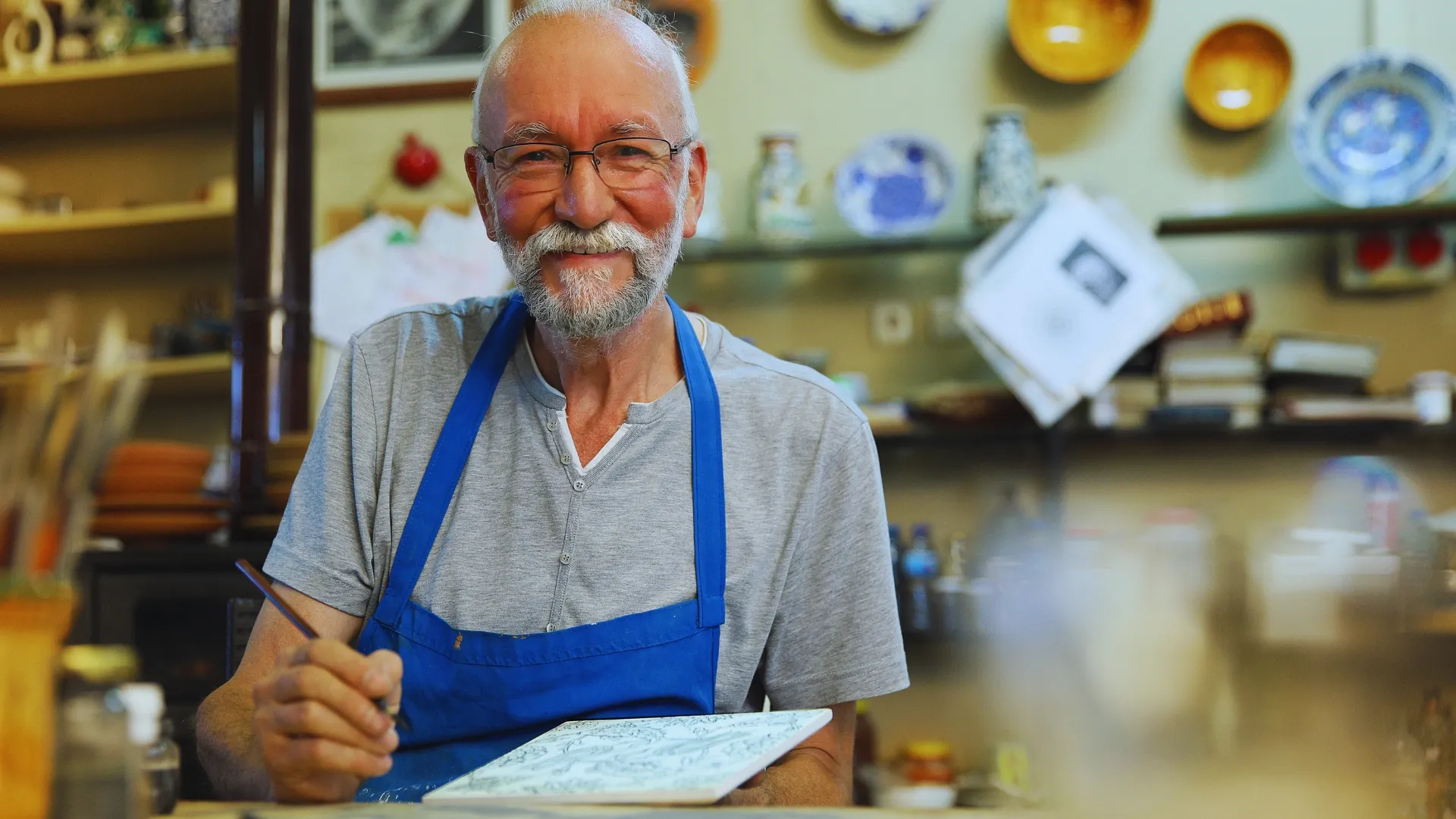
Adilcan Güven & Nursan Güven; İznik Tile Masters
I had been told that in İznik there was a workshop where time does not move forward — it gathers.
When I stepped into the Adil Can Nursan Art Studio, I understood.
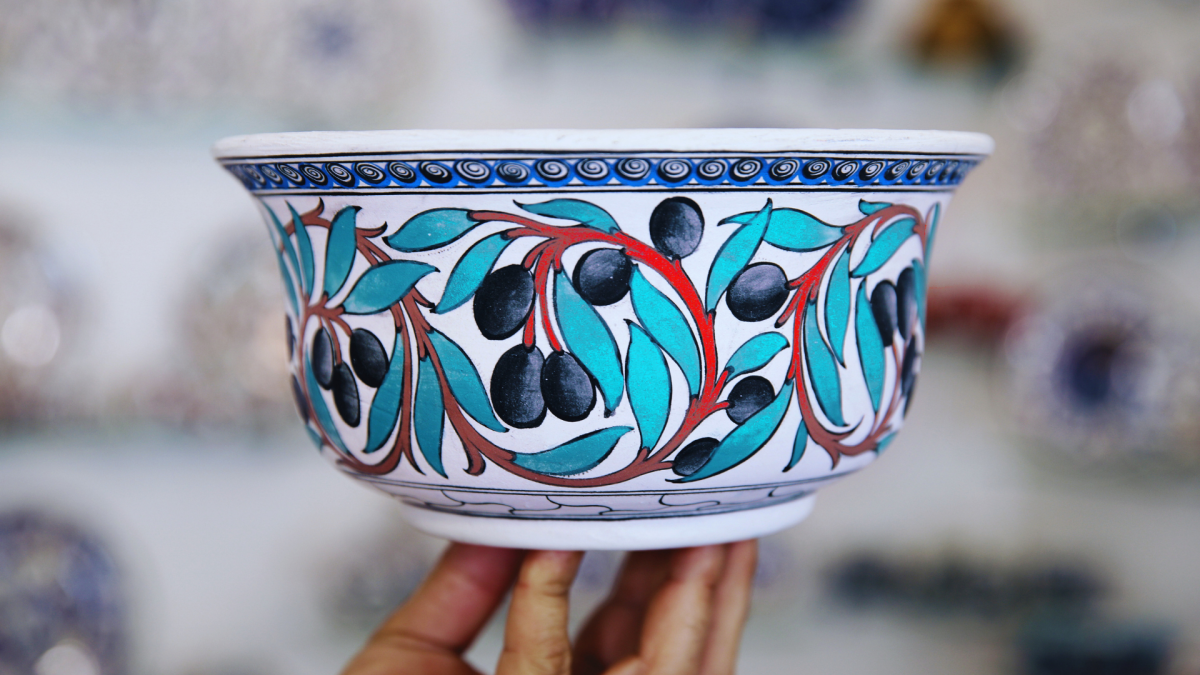
The air carried the quiet scent of clay and kiln warmth. Shelves were lined with pieces that seemed to belong to different centuries — Seljuk sgraffito bowls, Roman relief ceramics, blue-and-white forms that could have lived in 16th-century İznik. Nothing felt reproduced. Everything felt remembered.
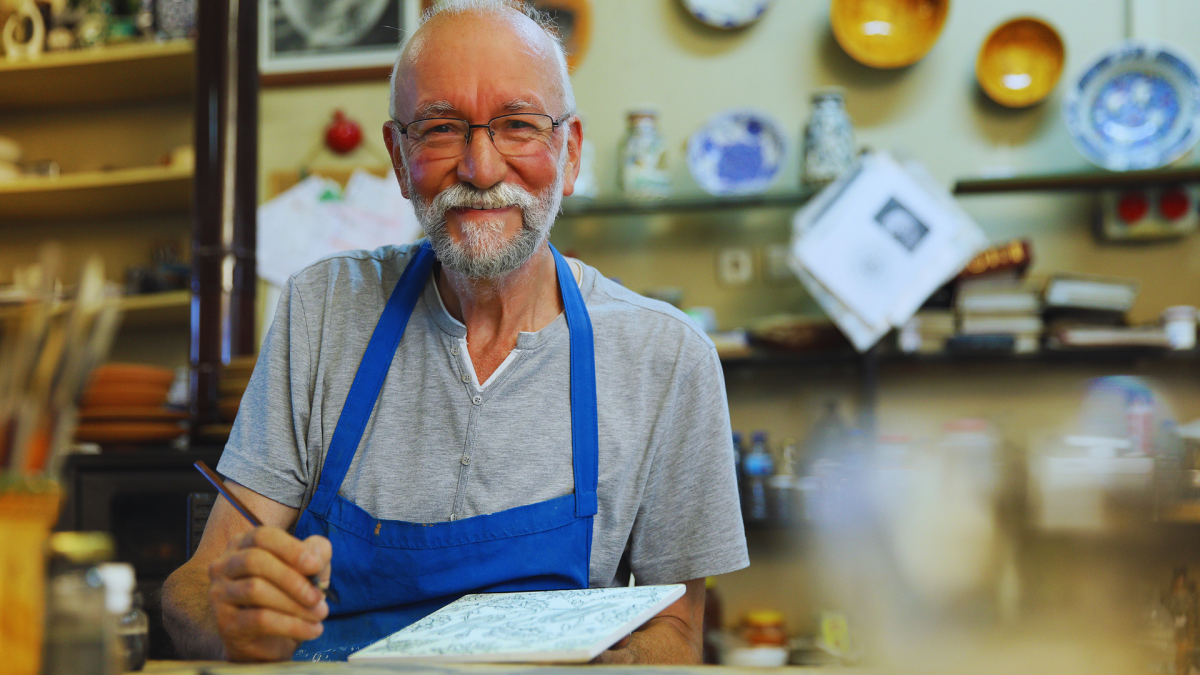
At a long wooden table in the center of the atelier, Adil Hoca and Nursan Hoca sat side by side.
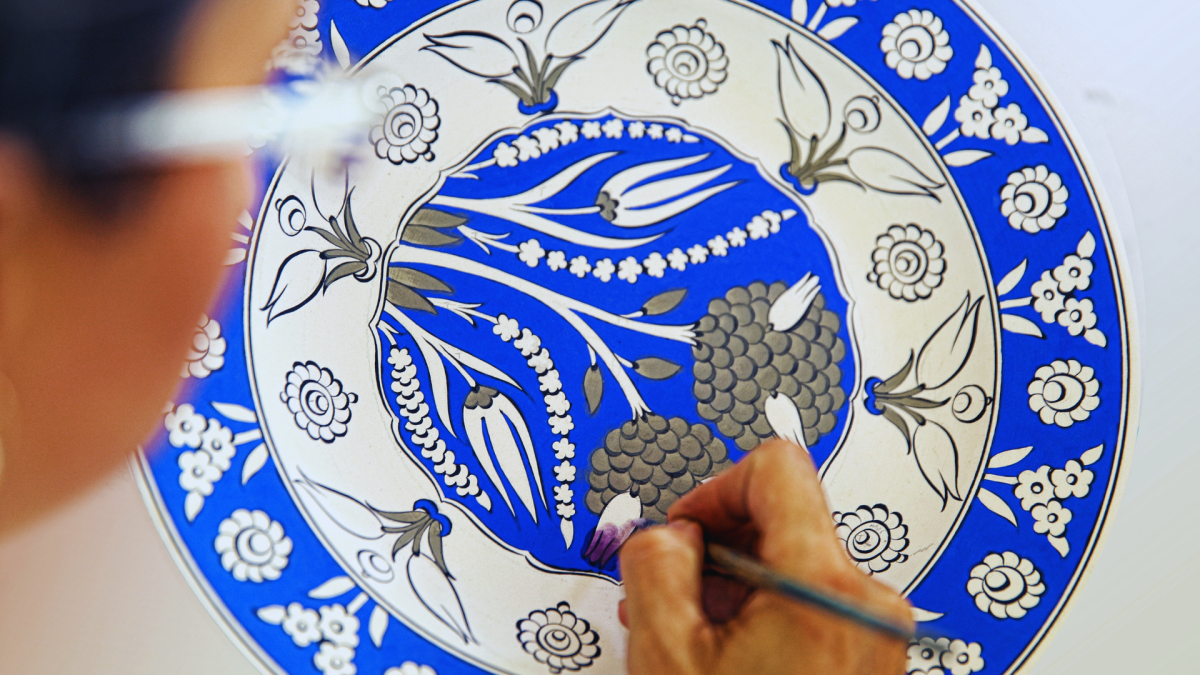
Each held a fine brush. Each leaned over a white ceramic surface waiting to receive a pattern.
They were drawing.
Adil Hoca’s lines were precise, measured — you could sense decades of discipline in every curve. Nursan Hoca’s touch moved with a softer rhythm, fluid and intuitive. Their styles were distinct, yet somehow inseparable.
Sometimes one would pause. The other would glance over. A quiet suggestion. A small adjustment in balance. A shared look that carried more than words.
They weren’t copying the past.
They were listening to it.
Adil Can Güven began his journey in ceramics in 1970, apprenticing in Kütahya, Çan, and Çanakkale under master artisans, inheriting not only technique but lineage. Since 1983, together with Nursan Hanım, he has continued producing and researching traditional Anatolian ceramics using authentic materials and methods in their İznik workshop.
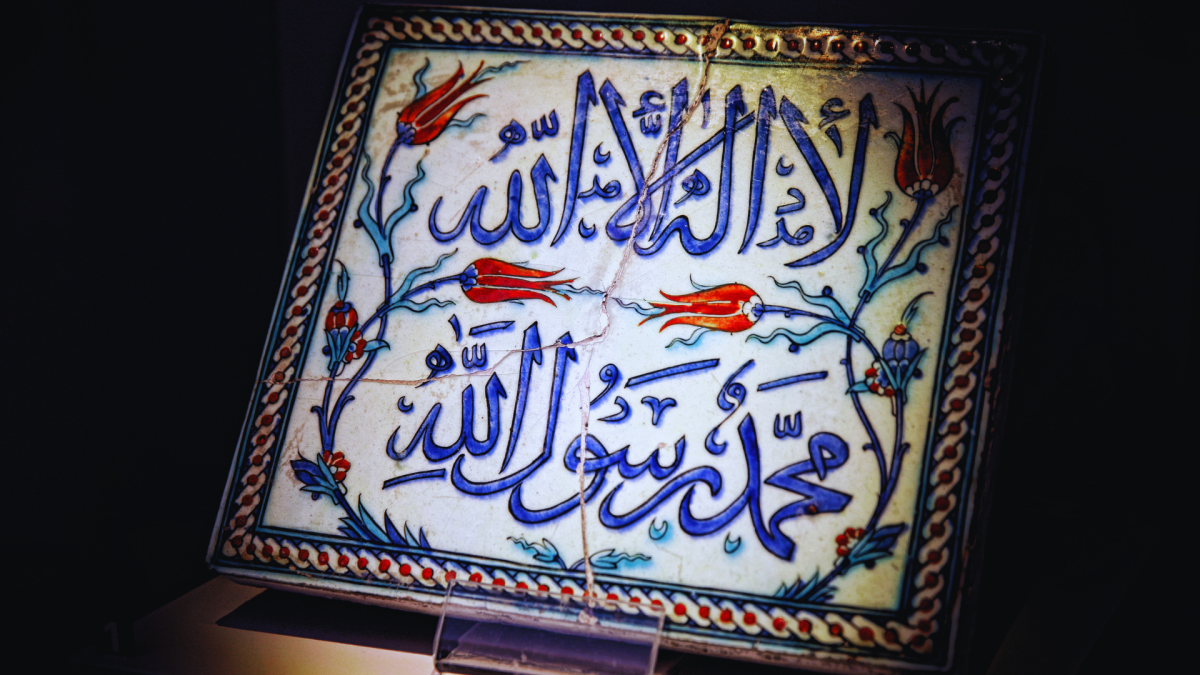
From burnished vessels dating back to 5000 BCE to reduction-fired Greek ceramics, from Roman relief ware to Byzantine and Seljuk sgraffito, from slip-decorated pieces to Seljuk and Ottoman glazed ceramics, from Beylik blue-and-whites to 18th-century Kütahya tiles, and the iconic 15th–17th century İznik ceramics made with local raw materials — each era is studied with scientific care and interpreted with philosophical understanding.
At one point, someone mentioned — gently, almost in passing — that Adil Hoca is recognized as a “Living Human Treasure.”
The title did not feel ceremonial in that room.
It felt lived.
Because what happens here is not imitation. It is continuity.
Their brushes moved independently, yet their rhythm was shared. At one moment, the borders of their designs approached the same edge. Without interrupting the flow, they adjusted instinctively — like two musicians finding harmony without rehearsal.
This atelier is not a production site.
It is not a showroom.
It is a bridge — between civilizations, between aesthetics and meaning, between two artists who have chosen to dedicate their lives to shaping history together.
In that quiet room in İznik, I realized something simple:
Clay remembers.
And in the hands of two people who draw with both knowledge and love, it continues to speak.

Interactions
Other Venues

For All Requests, Complaints, and Questions
444 16 00