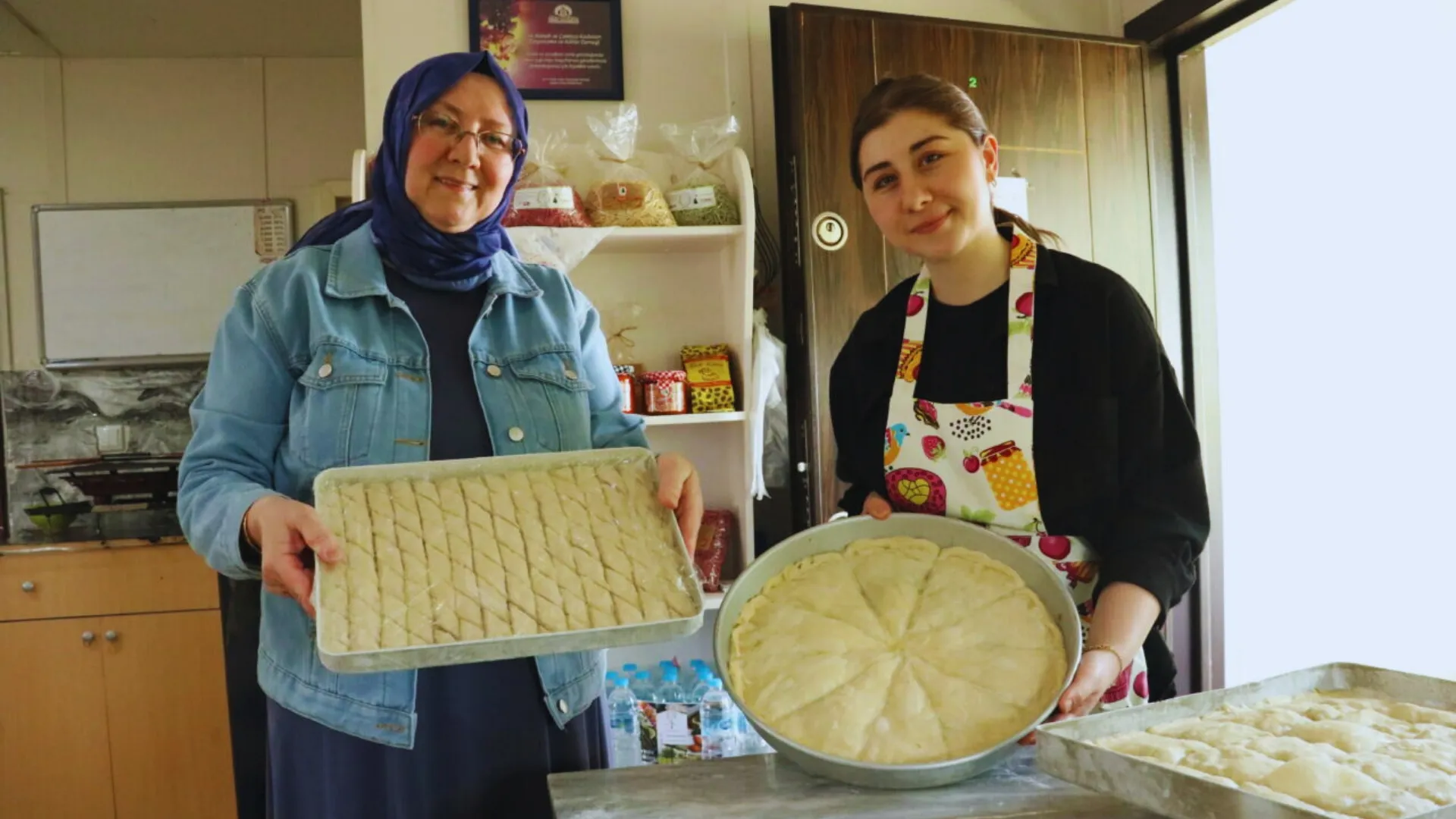
Hülya Bolat; Chairperson of the Nilüfer Çamlıca Women's Solidarity and Culture Association
The morning begins in the garden.
Hülya Hanım bends slightly, pulling leeks from the soil with practiced hands. The earth is still damp. She shakes off the excess dirt, gathers them in her basket, and heads back inside. By noon, these same leeks will be folded into Arnavut böreği at the Çamlıca Women’s Association café in Nilüfer.
From garden to table — without detour.
Inside the kitchen, flour dust hangs lightly in the air. Stainless steel counters, wooden rolling pins, trays waiting in neat stacks. This is not a restaurant kitchen in the commercial sense. It feels closer to a collective home — purposeful, warm, alive with quiet focus.
Hülya Bolat, founder and president of the association, trims the leeks and slices them finely. The knife moves steadily. The filling is simple: leeks, a little oil, careful seasoning. Nothing exaggerated. Nothing artificial.
She begins rolling out the dough.
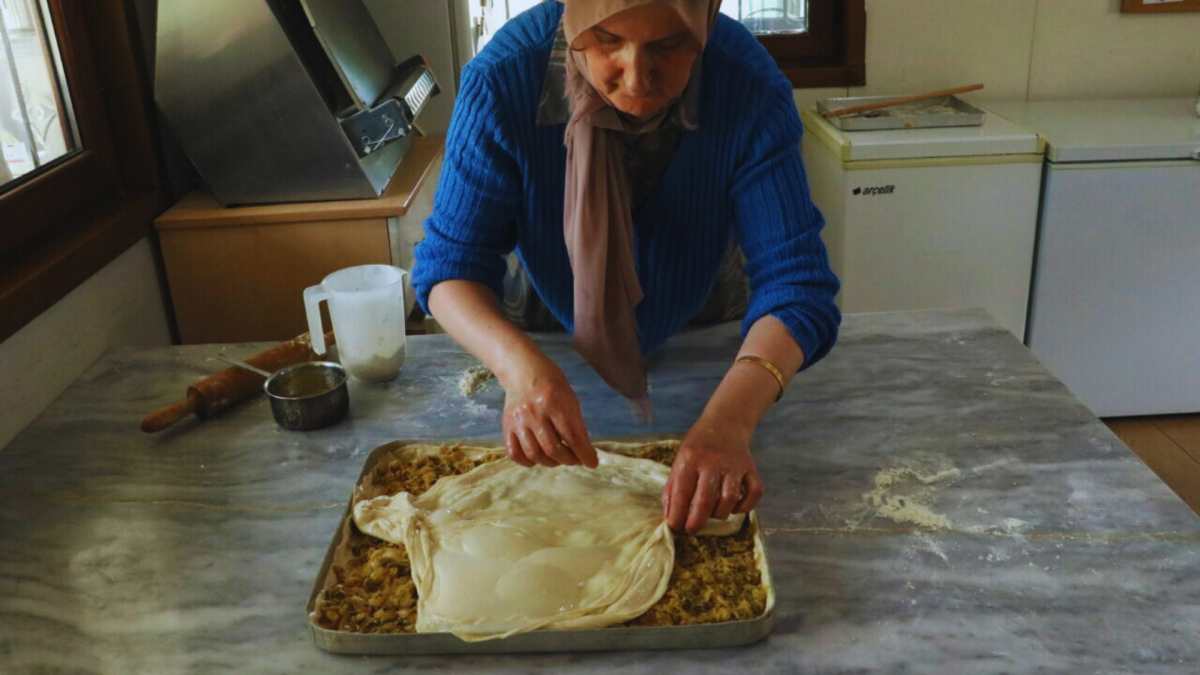
It must be thin — almost translucent — but strong enough to hold the layers. She turns it, stretches it gently across the table, brushes it with oil, spreads the leek filling evenly. The movement is rhythmic, confident.
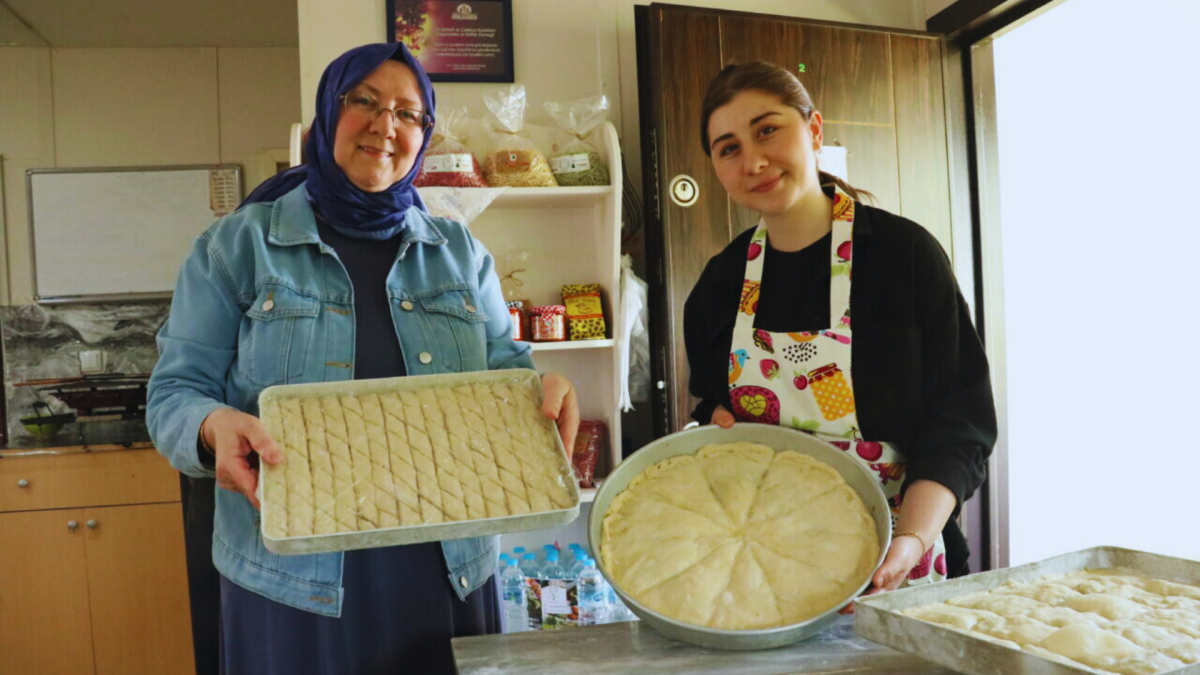
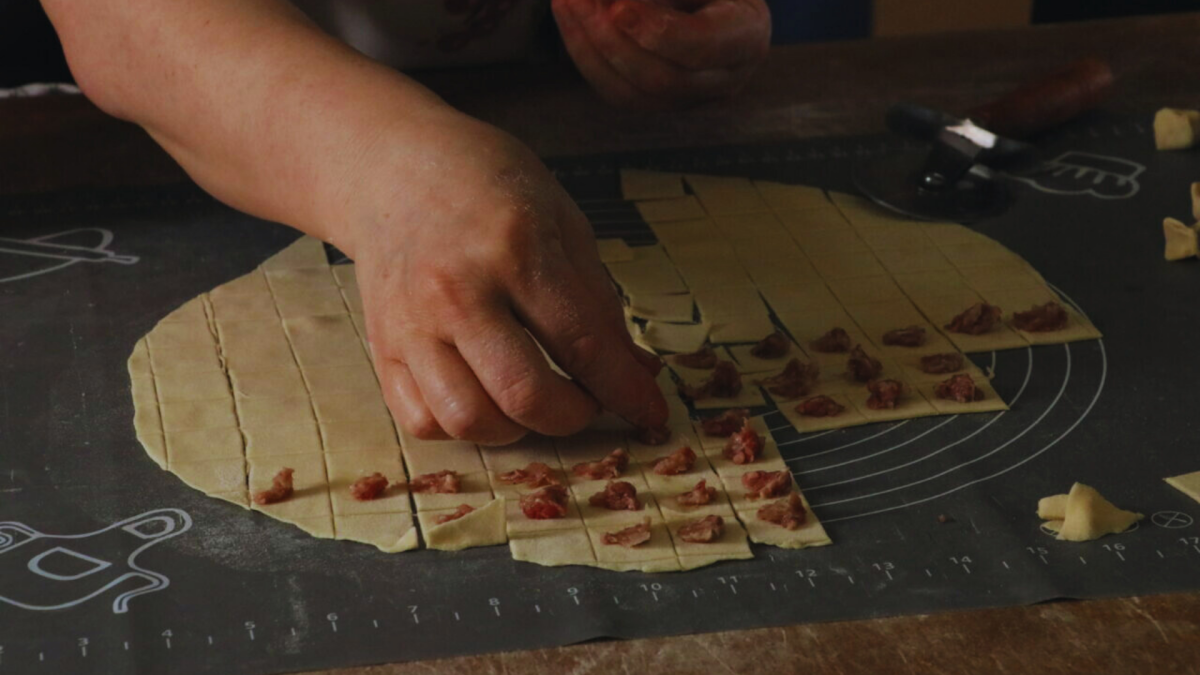
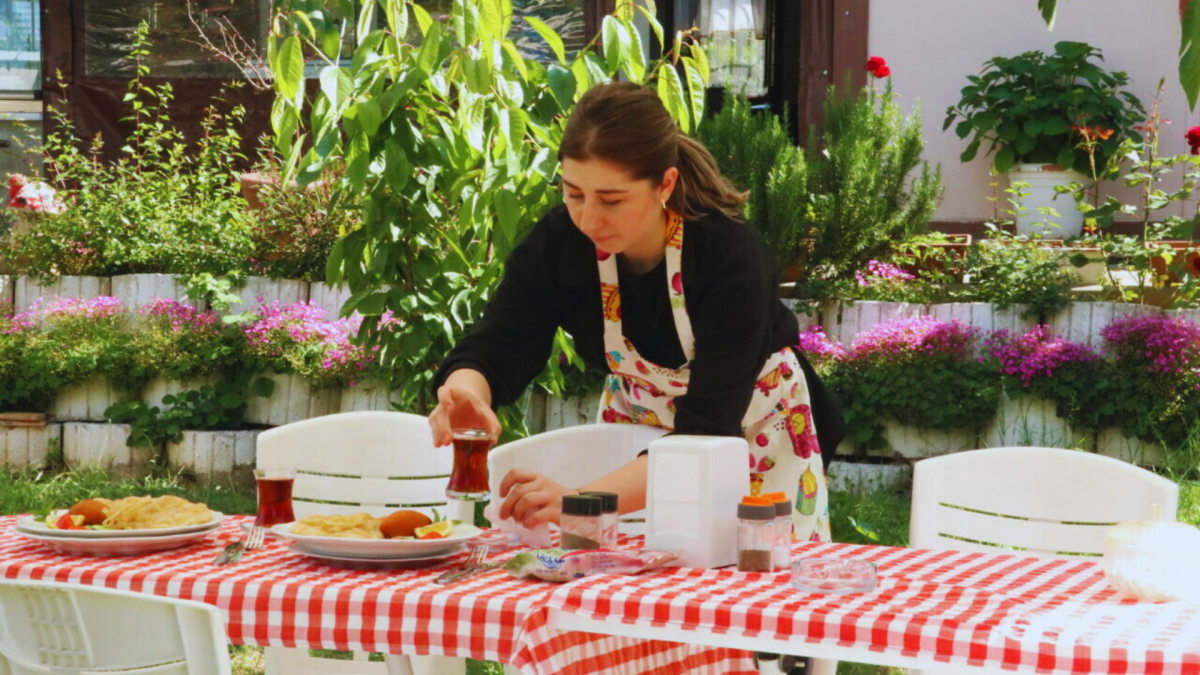
Around her, other women are shaping mantı, sealing each small parcel by hand. Someone else is preparing baklava trays. In another corner, tea glasses are being lined up for service.
This kitchen did not appear overnight.
Years ago, Hülya Hanım and her friends would gather and ask a simple question: What can we do together? How can we turn what we produce at home into income? How can we create a social space of our own?
In 2016, they decided to establish an association.
At first, they participated in charity bazaars and social responsibility projects. They tested recipes. They built trust. They gained experience. Then, through a cooperation protocol between Nilüfer Municipality and neighborhood women’s associations, they were allocated a physical space at the end of 2019.
In 2020, they opened their café.
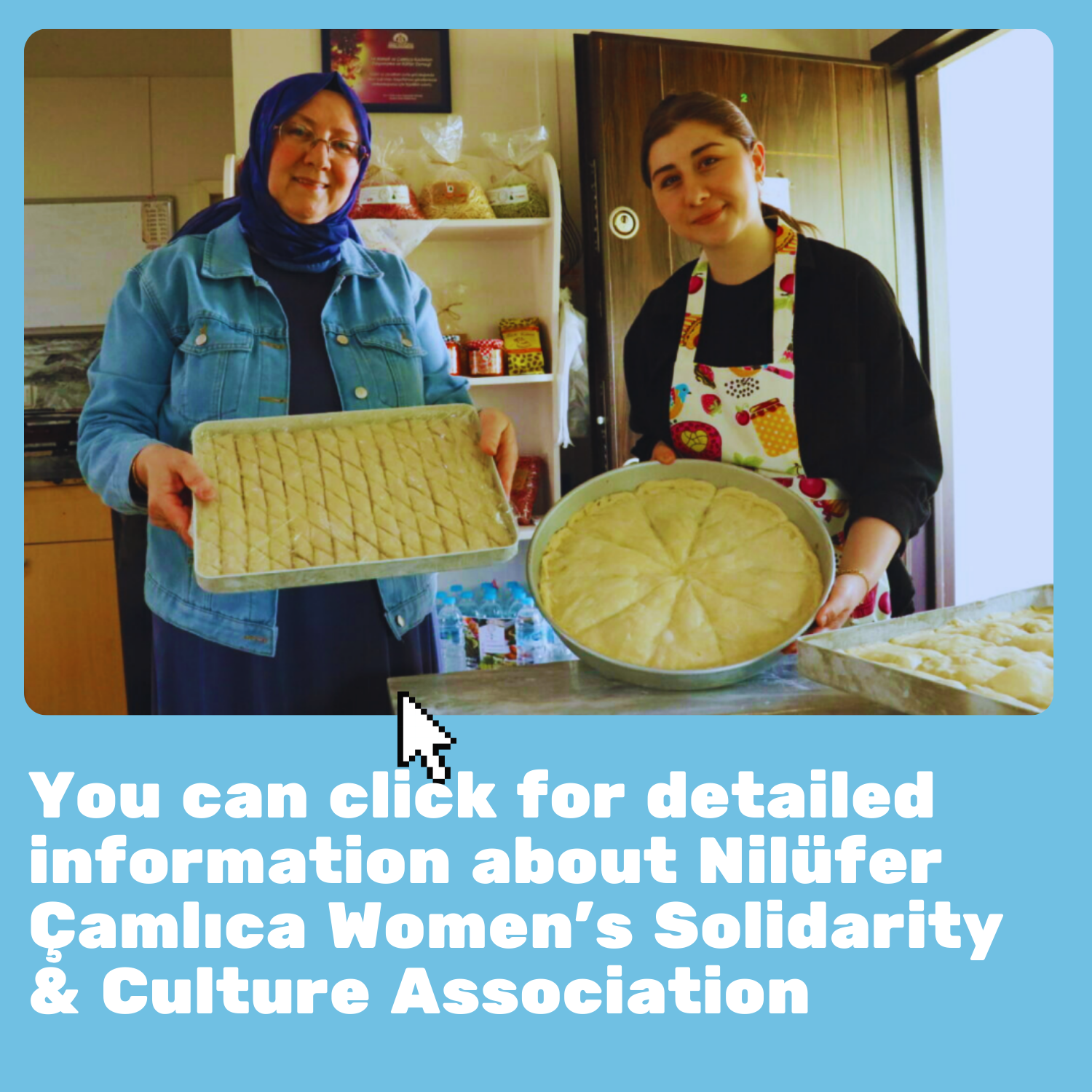
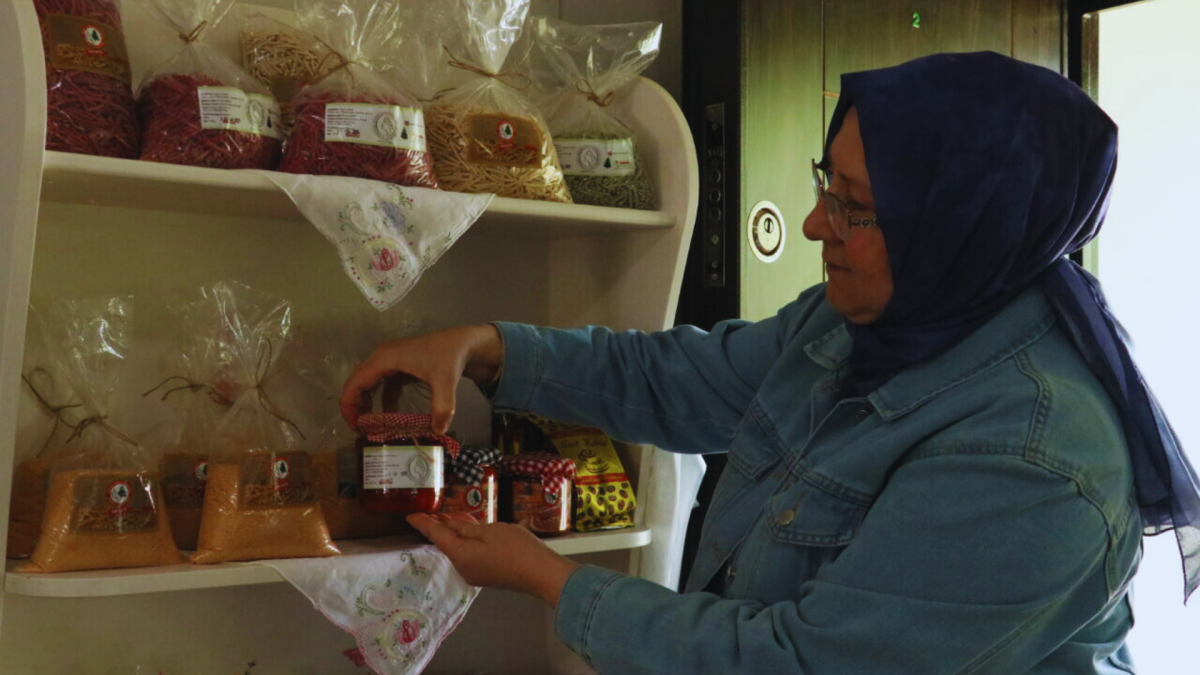
Today, they gather here every weekday to produce together — mantı, baklava, Arnavut böreği, breakfast spreads. They host birthdays, engagement celebrations, women’s gatherings. The space hums with conversation and shared effort.
Hülya Hanım slides the tray of börek into the oven.
“When women come together,” she once said, “they gain self-confidence. They gain economic freedom.”
You can see that confidence in the way the kitchen moves — no hesitation, no hierarchy, just coordination.
For many of the women, this association has meant financial contribution to their households. But it has also meant something less visible: independence. Relief. Belonging.
“It’s like therapy,” Hülya says. “Women come together, talk about their problems, and forget them for a while.”
In one corner, her daughter Zeynep checks the café’s social media page between helping with service. Now an engineer, she grew up in the association — attending trainings, listening to discussions about hygiene standards, production methods, women’s employment.
She says it shaped her future.
At university, she studied food science — gluten structures, flour types, production systems. Here, she sees it in practice. Different flour for mantı. Another for pastry. Texture, elasticity, moisture — no longer abstract concepts, but daily decisions.
The oven door opens.
The Arnavut böreği emerges golden, layered, fragrant. Hülya Hanım cuts it into precise squares. Steam rises, carrying the scent of leeks she harvested that morning.
From her garden.
From her hands.
From a shared kitchen built through cooperation.
The Çamlıca Women’s Association began with women looking for a way to support their families and create a space of their own. Today, it is more than a café.
It is income.
It is confidence.
It is solidarity.
In Çamlıca, empowerment doesn’t arrive with speeches.
It begins in the soil.
It continues at a long kitchen table.
And it is served warm — layered carefully, like Arnavut böreği — carrying both effort and freedom in every bite.
Interactions
Other Venues

For All Requests, Complaints, and Questions
444 16 00