
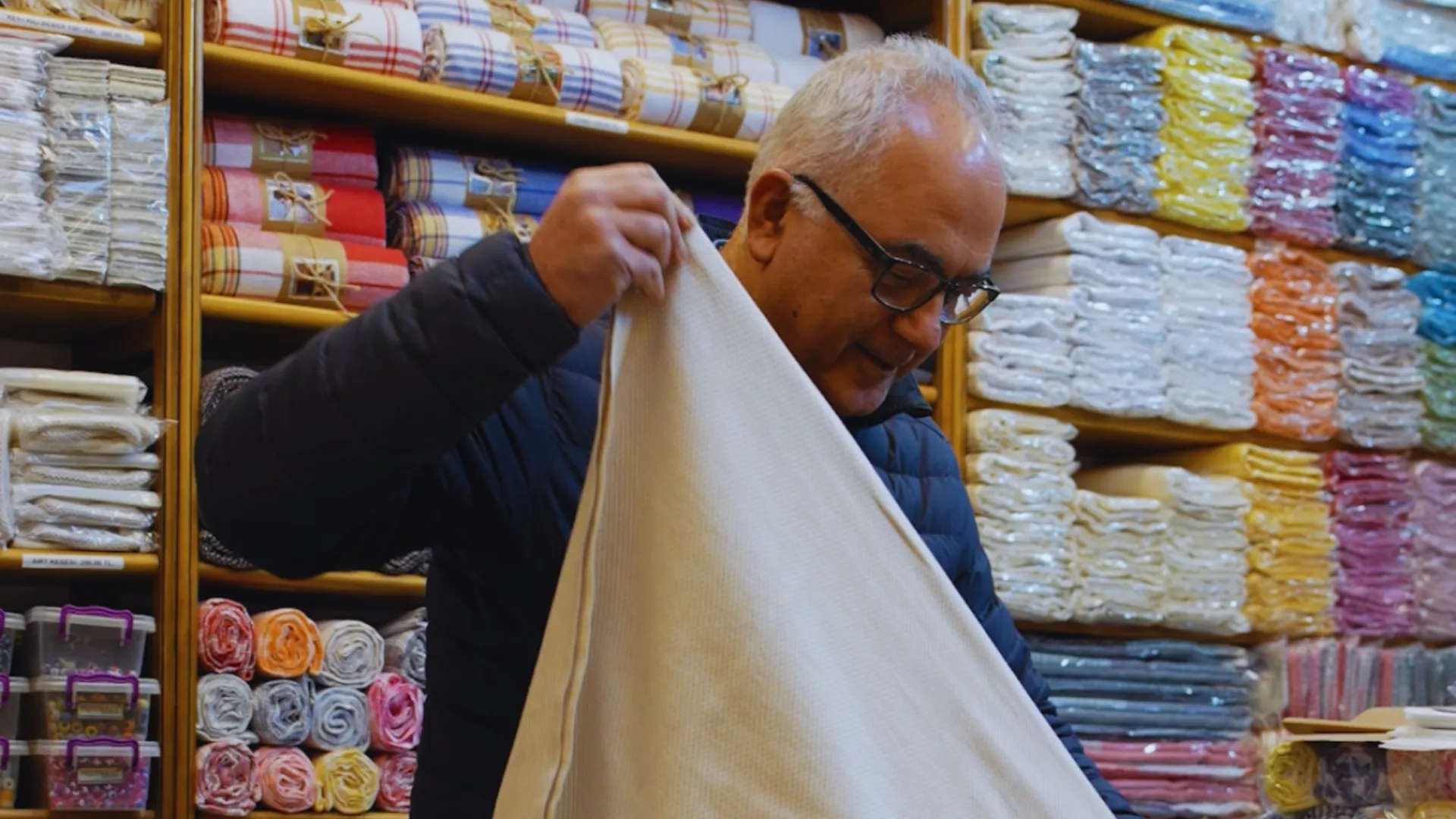
Levent Aldemir; Traditional Peshtamal Marker
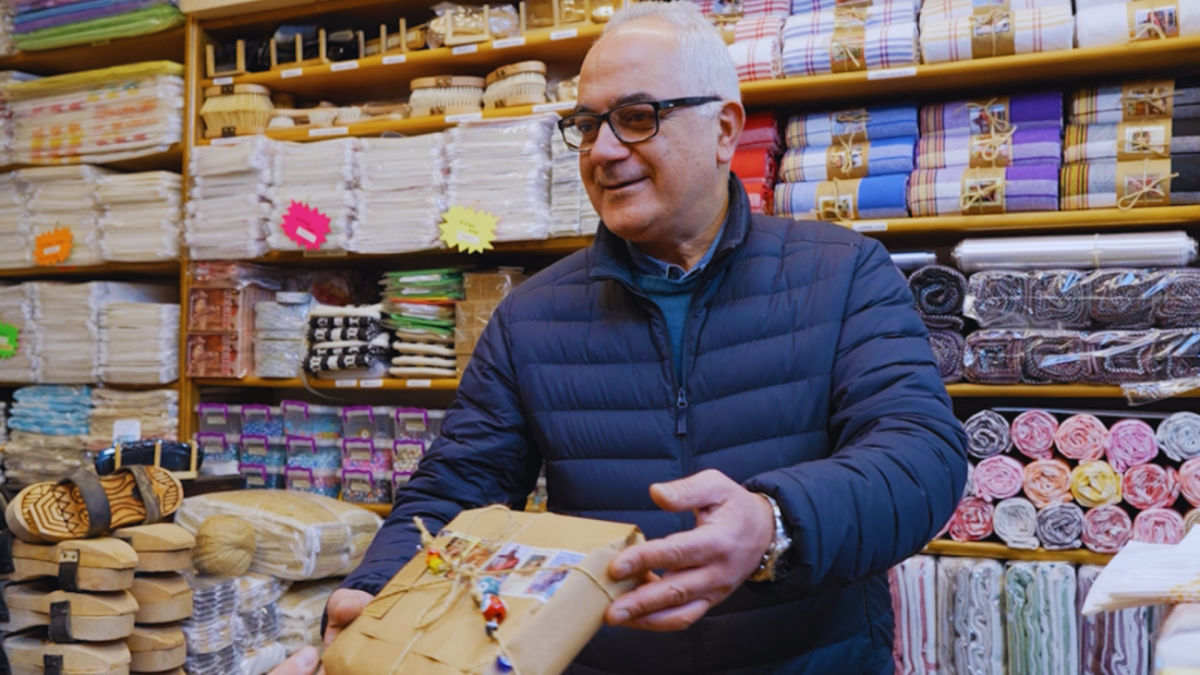
The first time I stepped into Peştemalci Levent’s shop, I didn’t feel like I was entering a store. I felt like I had pushed open the door to a story still being woven.
The scent of cotton greeted me first — clean, warm, almost sun-dried. Stacks of neatly folded peştamals lined wooden shelves, their textures shifting from soft matte cotton to subtle sheens of silk blends. Nothing flashy. No loud colors demanding attention. Just quiet confidence.
Levent Bey was standing behind a long wooden table, running his hand over a freshly woven towel as if it were something alive.
“This all started in 1965,” he told me, smiling. “My father, Kemal Aldemir.”
Back then, the company was called Hülyam Havlu. Everything was produced on their own looms, sold in their own shop. No mass production. No outsourcing. Just fabric, patience, and craft.
After graduating as a geological engineer from Istanbul University, Levent was expected to take over. He could have expanded, industrialized, modernized in the conventional sense. Instead, he chose to refine.
“I asked myself,” he said, picking up a peştamal so light it barely weighed in my hands, “what should a towel really be?”
He answered his own question with four simple principles:
Light.
Long-lasting.
Soft — without losing absorbency.
Comfortable, and simply designed.
It sounds obvious. Until you realize how rare it is.
In 1992, the nickname people had given him — “Peştemalci Levent” — became more than a title. It became a brand. A patented identity. But the looms remained old-style. The cotton remained 100%, unless a client asked for something special: 50% bamboo, 50% linen, sometimes even silk woven in.
He showed me the difference between machine-made and handwoven. Eighty percent of what they produce today is still woven by hand. You can feel it — the subtle irregularity, the human rhythm in the threads.
And then he mentioned, almost casually, that these towels travel far. England. Germany. Japan. Canada. Australia. Nearly forty countries. Yet here they are, still folded in a modest shop, waiting for someone to walk in and understand.
As I ran my fingers along a striped cotton peştamal, I realized something: this wasn’t just a towel. It was portability. It was heritage. It was a piece of Bursa you could fold into your suitcase.
When I left the shop, I didn’t just carry a peştamal with me. I carried the weight of something paradoxically light — decades of craft, woven quietly into fabric that dries you after a bath, or wraps you at the beach, or travels with you across continents.
And somehow, it still feels like it belongs to that small wooden shop where the story began in 1965.

Interactions
Other Venues

For All Requests, Complaints, and Questions
444 16 00