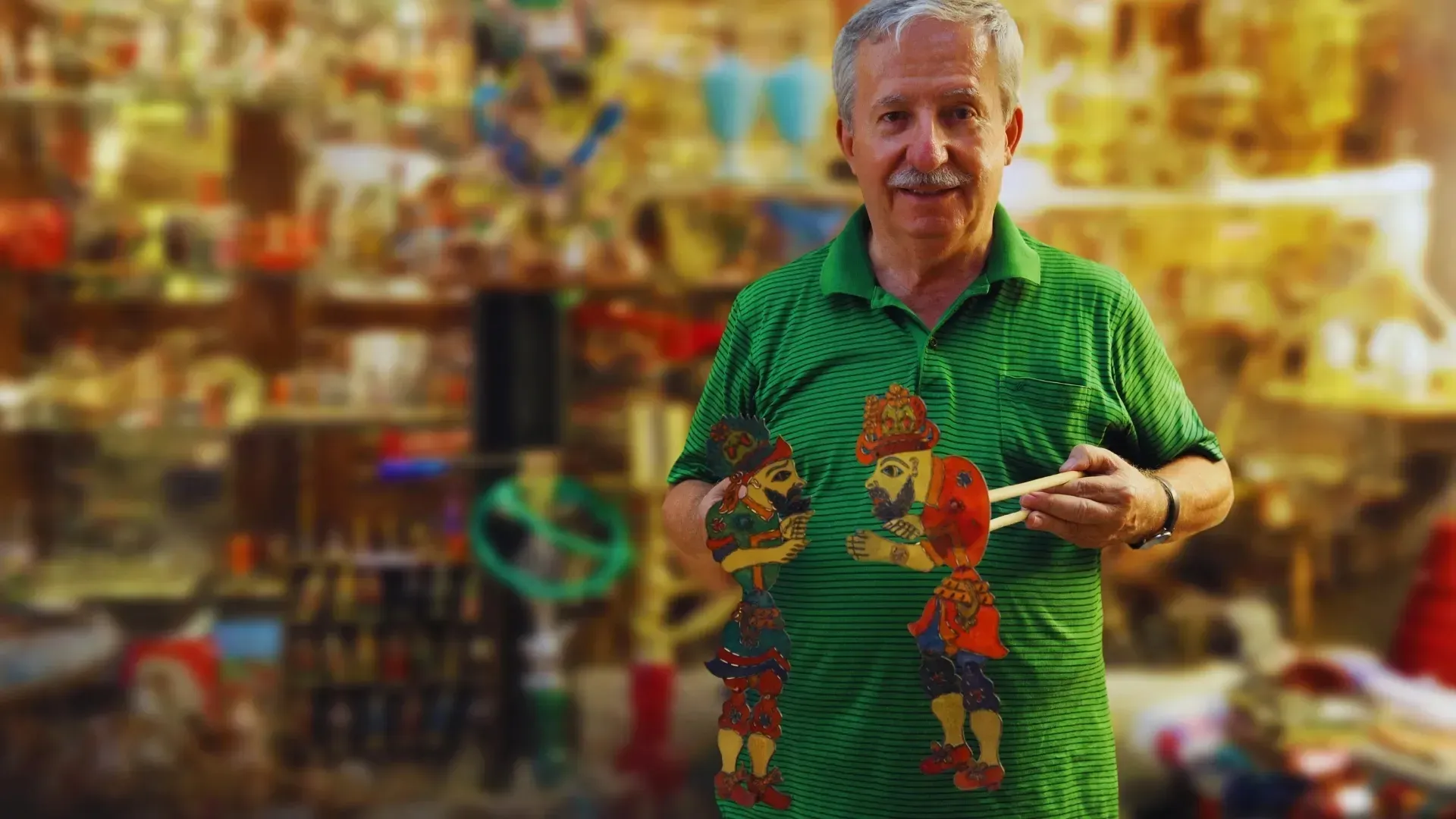
Şinasi Çelikkol; Karagöz Shadow Puppet Performer - Living Human Treasure
The shop is so small you could almost miss it.
Ten square meters, tucked inside Bursa’s historic Eski Aynalı Çarşı — the kind of place where light filters in softly and dust motes hang in the air like tiny stage lights waiting to be turned on.
But the moment you step inside, you realize the space is larger than it looks.
Because the walls are alive.
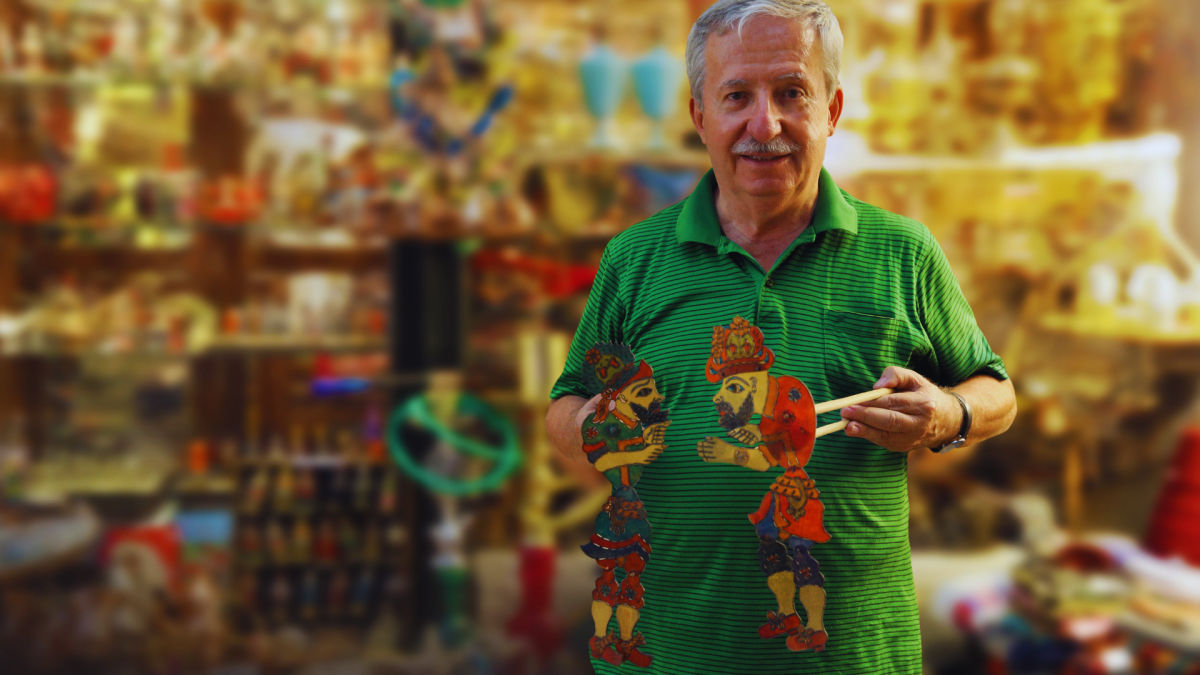
Karagöz figures — delicate, translucent, hand-cut from leather — hang in careful rows. Some mischievous, some wise, some exaggerated in the way only shadow theatre can allow. Their colors glow even in stillness. Reds, greens, deep blues. Each one slightly different. Each one unmistakably made by hand.
And behind them stands Şinasi Hoca.
Recep Şinasi Çelikkol — officially recognized by UNESCO as a bearer of intangible cultural heritage, and honored as a “Living Human Treasure” — does not introduce himself with titles. He introduces himself with a smile and a story.
He first fell in love with Karagöz as a child, inspired by a master known as Küçük Ali and encouraged by his father’s fascination with the shadow play. After returning from military service, he committed fully to the art. He apprenticed under masters — Metin Özlen, Orhan Kurt, Taceddin Diker, Torun Çelebi — and in 1994, when Hadi Poyrazoğlu tied the ceremonial peştamal around his waist, he officially became a hayali — a Karagöz puppeteer.
But standing in that small shop, none of it feels ceremonial.
It feels intimate.
He takes a piece of leather — camel if he can find it, more often young cowhide — and shows how it is cut with a sharp nevregan. Each figure is pierced, carved, painted, assembled. There is no laser. No template. Just hand, blade, and patience.
“These are not souvenirs,” he tells me gently. “They are characters.”
And then, without warning, the shop becomes a stage.
A small screen is lifted. A light glows behind it. A tambourine rests nearby — because Karagöz is not silent theatre; it is musical, rhythmic, alive.
His voice shifts instantly. Hacivat’s refined tone. Karagöz’s mischievous retort. The room fills with dialogue that has traveled centuries. Satire. Wit. Social commentary wrapped in humor.
I forget how small the shop is.
Şinasi Hoca has been performing since 1988, teaching apprentices through structured seminars and national projects, raising a new generation of Karagöz artists. There is a hierarchy in this world — first apprentice, then yardak (assistant), then dayrezan (tambourine player). Only when three masters approve can the peştamal be tied. Only then does one become a true Karagözcü.
Tradition is not inherited automatically here. It is earned.
He has carried Karagöz to Belarus, Germany, Greece. In Greece, he once gifted a Karagöz figure to a Karagiozis museum — a symbolic exchange between shadow cousins across cultures. Back home in Bursa, he helped revive the Karagöz Festival in the 1990s, ensuring the art would not fade into a monument but remain a living performance.
At the presidential award ceremony where he received his Living Human Treasure honor, he didn’t give a speech.
He recited a perde gazeli — the poetic opening that begins a Karagöz performance.
Because for Şinasi Hoca, recognition does not end the story.
It deepens the responsibility.
As I leave the shop, one of the leather figures catches the light just right — its shadow stretching across the wall. And I realize something simple:
In this ten-square-meter space, centuries breathe.
Karagöz is not behind glass.
It is cut by hand.
It is voiced.
It is laughed at.
And as long as Şinasi Hoca stands behind the screen, the shadows will never fall silent.

Interactions
Other Venues

For All Requests, Complaints, and Questions
444 16 00